

Written by Ar. Ruchika Deshpande | Updated March 2026.
You know how in India we never really buy a plant “just like that”? Like, there’s always a reason behind it. There’s Tulsi for purity, money plant for prosperity, snake plant for air filtration, etc. And some people even keep a lucky bamboo, aka the Song of India in their homes, to enjoy all the lucky bamboo plant benefits it has to offer!
Now, some people say that it brings positive energy, some believe it brings balance and success. While some argue that it’s really important for personal and career growth. I’ve even kept lucky bamboo pots on my work desks, near entry corners, and even in low-light rooms. And what genuinely surprised me wasn’t just how it improved the feel of the space. It was equally, ridiculously easy to maintain, propagate and add an Instagram-worthy vibe too! What more do we even want?
Hi, I am Ar. Ruchika Deshpande, a regular 9-6 individual like all of you. I understand busy schedules, compact homes, and the desire for urban greenery. And in this guide, I am not going to bore you with repetitive and generic lucky bamboo plant benefits. Instead, I’ll break down the practical, psychological, environmental and cultural benefits fully. Some backed by research and some tried & tested from my own experience. And yes, I’ll also share trusted buying suggestions toward the end; so stay with me.

Top Insights
- You can get the straight-stalk, variegated, miniature-table top and spiral lucky bamboo varieties for better health, focus and productivity in homes & offices.
- Lucky bamboo isn’t actually a bamboo species; it’s Dracaena Sanderiana, a tropical African plant that symbolizes peace and fortune.
- The number of lucky bamboo stalks ain’t random as such. In fact, most traditional systems assign specific meanings & lucky bamboo plant benefits to 3, 5, 6, 8, and 9 stalk arrangements. And people often choose them based on career, health, or prosperity goals.
- Top Insights
- Top 8 Lucky Bamboo Plant Benefits You Need to Know
- 1. Lucky Bamboo Plant Benefits for Air Purification
- 2. It's Extremely Easy to Maintain
- 3. Lucky Bamboo Plant Benefits for Focus & Productivity
- 4. It Doesn’t Need Soil!
- 5. Lucky Bamboo Plant Benefits for Bringing Fortune
- 6. It’s Surprisingly Easy to Grow
- 7. Lucky Bamboo Plant Benefits Towards Adaptability to Light
- 8. It's Lucky as per Feng Shui
- Lucky Bamboo Benefits & the Relevance of Stalk Numbers
- Popular Lucky Bamboo Varieties for Homes & Workspaces
- FAQs
- Conclusion
- Citations
Top 8 Lucky Bamboo Plant Benefits You Need to Know
Well, we all believe that plants carry energy and vibes here in India. Like, some plants disrupt energy flow, while some others support growth & balance. And lucky bamboo fortunately falls in the second category. It purifies air, removes toxins & supports focus too. In fact, here are the 8 most meaningful lucky bamboo plant benefits that make it such a trusted choice:
1. Lucky Bamboo Plant Benefits for Air Purification

You know, there’s a thing called indoor pollution (cit. University of Minnesota) as well. And it’s basically when major pollutants, say PM2.5, PM10, ozone, nitrogen dioxide, sulfur dioxide, and carbon monoxide increase beyond the permissible limits in any room.
Now, this pollution doesn’t come from the outside air alone. In fact, formaldehyde comes from the furniture, benzene from cleaning products, fumes from paints, synthetic fabrics, etc. And then, they eventually give you headaches, eye rashes, heaviness and what not!
So, lucky bamboo plant benefits work exactly at this level. In fact, even the NASA clean air study found that most indoor plants like the lucky bamboo absorb over 6,000 – 8,000 mcg formaldehyde & 10,000 – 20,000 mcg benzene effectively. Now, that’s a lot, right?
I’ve also observed that lucky bamboo’s don’t shed pollen, leaves, fragrance, micro particles, nothing! So, they won’t give you nasty headaches, exhaustion, respiratory issues or breathlessness. In fact, you can keep one in the bedroom too, probably on the window sill for better filtration.
Caution: Avoid placing your lucky bamboo plants under the AC vents directly; this might eventually hamper the leaf growth & reduce filtration.

2. It’s Extremely Easy to Maintain
So, as you might have guessed from the title, lucky bamboo plants are extremely easy to maintain. One, they grow on low light & fertilizer. And two, you can simply cut & replant them if they wilt or dry anytime. Plus, they grow well on desks, shelves, balconies, window sills, hydroponics, everything! Just regular leaf wiping and weekly water changes are enough! Here are the exact details:
Lucky Bamboo Hydroponic Setup:
- Get a glass or ceramic container & fill it with water. Then, remove the chlorine by using aquarium dechloriners, water softeners, etc.
- Now, submerge the roots of your lucky bamboo plant (not the full stem). You can also add gravel or pebbles to stabilize them & enjoy all the lucky bamboo plant benefits rightly.
- Finally, keep it in bright, indirect light (preferably on your window sill). And yes, do change the water once in 7 days to avoid mosquitoes.
Quick Note: Remember that municipal water contains chlorine, chloramine, and dissolved salts. These are safe for us. But over time, they stress the lucky bamboo roots. That’s when you see yellowing leaves, brown tips, or slow decline; and eventually, people blame the plants.

Lucky Bamboo Soil Setup:
- First, prepare a well draining soil mixture of 50-60% cocopeat, 20-30% perlite and 10-20% vermicompost. You can also add in organic waste or cow dung ash to balance the ph.
- Then, open up the drainage holes & place stones or a coir sheet on them. Now, you can fill the bottom layer with coarse or granular soil, fertilize it a bit and plant your lucky bamboo. If you want, you can also place a cut aloe vera leaf to support root development. A pinch of turmeric also works.
- Finally fill the pot with the leftover soil and place it in bright, indirect light.
Caution: Avoid using clay-heavy or garden soil mixes for lucky bamboo; Those stay damp and eventually damage the roots too.
3. Lucky Bamboo Plant Benefits for Focus & Productivity

Did you know that the University of Exeter found that plants actually help increase your productivity by over 38% (cit. News Archive). And honestly, the lucky bamboo benefits are no different!
See, most desks are visually harsh today. Like, the screens, edges, lighting, everything feels tiring! And that’s where the lucky bamboo actually helps. In fact, psychologists even call it a “soft fascination,” meaning it allows your eyes to relax without breaking focus. You don’t drift. You simply feel less strained.
In fact, I’ve personally observed this on my long writing days! Like, I’ve always felt a visual relief & positive psychology when I place it on my table. Plus, it doesn’t need that much space either; just about 8-9 inch pot is enough. So I really love it that way!
Quick Tip: Try to place the lucky bamboo slightly near your monitor only. It will reduce your visual fatigue and help you concentrate better.
4. It Doesn’t Need Soil!
So, one of the most under-rated benefits of the lucky bamboo is that it doesn’t need soil. So basically, you won’t face root rot, soil compaction, fungal growth, pests, fertilisation and mold issues that much. Ah, that’s so much better for homes with kids / senior citizens / allergic people, right?
Now, I personally prefer RO water for this, since it has less salts & minerals. You can use tap water too. But let it sit uncovered for 12-24 hours before using it. Also, try to dilute it with softer water or softening solutions to drastically reduce the mineral buildup too!
Quick Tip: Remember to clean the container & pebbles during every water change to reduce the algae and biofilm. It might affect the oxygen levels otherwise.
5. Lucky Bamboo Plant Benefits for Bringing Fortune
One reason why lucky bamboo is extremely popular now-a-days is its strong cultural symbolism. Especially in India, where people relate it with prosperity, balance and positive energy. In fact, some even say that it brings good fortune, drives out bad energy and promotes calmness.
Then, there’s research by NIH too. There, the team found out that interacting with indoor plants may reduce physiological and psychological stress, lower diastolic blood pressure and stabilize the heart rate. So yes, while lucky bamboo might not create fortune, it influences how a space feels. You feel less rushed. Your cortisol reduces. The decision-making improves. And that, my friends, helps you stay productive & fruitful in your work life.
Quick Tip: Try to keep your lucky bamboo near the entryways, desks or living areas to stabilize the energy flow and vibes in all your daily activities.
6. It’s Surprisingly Easy to Grow

So, one of the most important lucky bamboo benefits is obviously its flexibility to grow both in soil and water. Like, it can obviously grow in a clean vase, with pebbles and water. Or, it can also grow in soil & a pot with minimal fertilization.
It’s just that it’s an extremely fast-growing plant. So, prune it regularly & add over 2 parts of peat moss for bushier growth. Also, avoid keeping the plant in harsh sunlight or open air. Keep it in unfiltered light instead, more like what you find under a rainforest canopy.
Quick Tip: Avoid placing your lucky bamboo plant in bright sun; But, if that’s not an option, try to shield it with a sheer curtain or louvres to avoid scorching the leaves.
7. Lucky Bamboo Plant Benefits Towards Adaptability to Light
Now, one of my most favorite lucky bamboo plant benefits is indeed its adaptability to light. Like, it doesn’t become fussy or weak with minor light changes. Instead, it tolerates low light, artificial indoor lighting, filtered daylight, everything! Yes, it might burn a bit in bright sunlight, but the process isn’t that immediate; So, you will obviously get some time to notice the burning signs and change its place.
Plus, it doesn’t collapse or lose structure in dim spaces as well. So, you can eventually place your lucky bamboo plants in bathrooms, corridors, interior rooms and even office cubicles!
Quick Tip: Remember to observe the leaf’s color weekly. Pale yellowing leaves usually indicate excess light absorption while mushy ones show low light and root rot.
8. It’s Lucky as per Feng Shui
You know lucky bamboo has always been more than decor. Like I’ve actually realised that people rarely buy it for decor & foliage. Some also buy it for spiritual lucky bamboo plant benefits like luck, growth, stability & prosperity. In fact, Feng shui says that this one attracts positive chi or the energy that channels positivity based on its stalks. Like, a plant with 2 stalks promotes love, the one with 3 stalks stands for happiness. A 5-stalk plant, on the other hand, promotes health & balance.
Even Vastu-shastra is no different! Scriptures say that a lucky bamboo plant helps with wealth and financial flow in the southeast direction. And, with health and family well-being in the eastern one.
But you know what? I’ve still seen clients who don’t strictly follow Feng Shui or Vastu placing their lucky bamboos near the entryways or work-desks because it simply “feels right.” So, the rules ain’t rigid as such, and the plant will still look intentional no matter what!
Quick Tip: Remember that bent or yellowing stalks represent blocked plant growth in Vastu Shastra. So, always maintain clean water and prune off any dead growth as soon as possible.

Lucky Bamboo Benefits & the Relevance of Stalk Numbers

One of the most fascinating things about the lucky bamboo is obviously how it connects with numbers. Like, people don’t just buy the plant. They choose the intention behind it. Like, I’ve seen this so many times; Someone pauses and asks, “How many stalks should I get?” Not because of design. Because of meaning.
So, different stalks have different meanings as per Feng Shui traditions. Some support love & fortune, while others help with personal growth, health & prosperity. Here’s a reference guide for you:
| Stalks | Symbolic Meaning | Commonly Chosen For |
| 2 | Love & Partnership | Couples, Modern Scandinavian Homes |
| 3 | Happiness, Wealth & Longevity | Both Modern & Traditional Homes |
| 5 | Health & Balance | Gyms, Wellness Centers, Bedrooms |
| 6 | Career Success & Opportunities | Offices & Business Desks |
| 7 | Positive Energy & Growth | Personal Spaces |
| 8 | Prosperity & Expansion | Living Areas, Financial Growth |
| 9 | Overall Good Fortune | Homes, Offices, Long-term Stability |
| 10 | Completeness & Satisfaction | Major Milestones |
| 21 | Strong Blessings | Big Life Transitions, Say Birth, Marriage, Graduation, etc. |
Fun Facts: Do you know that you also get 4-stalk bamboos? But, those are avoided in many Asian cultures because the pronunciation sounds similar to the word for “death” in some languages. Also, most lucky bamboo arrangements come with a tied red ribbon which shows the fire and activation energy as per Feng Shui.
Popular Lucky Bamboo Varieties for Homes & Workspaces

Now, when people search for lucky bamboo, they usually don’t realise that there are visual variations in it. And honestly, choosing the right variety definitely changes how the plant fits your space. Here’s a reference guide for you:
| Variety | Visual Character | Common Placement | Why Do People Prefer It? |
| Straight Stalk Lucky Bamboo | Clean, Upright, Minimal look | Work desks & study tables | Feels structured, calm, and professional |
| Curly / Spiral Lucky Bamboo | Twisted decorative stems | Living rooms, reception areas | Symbolises flowing energy and growth |
| Layered / Tiered Bamboo | Multiple stalk levels arranged vertically | Entryways, compact corners | Looks fuller without occupying horizontal space |
| Heart-Shaped Bamboo | Intertwined shaped stalks | Romantic gifts, anniversaries | Associated with love and partnerships |
| Variegated Lucky Bamboo | Light-striped green foliage | Bright interiors | Adds subtle contrast and decorative appeal |
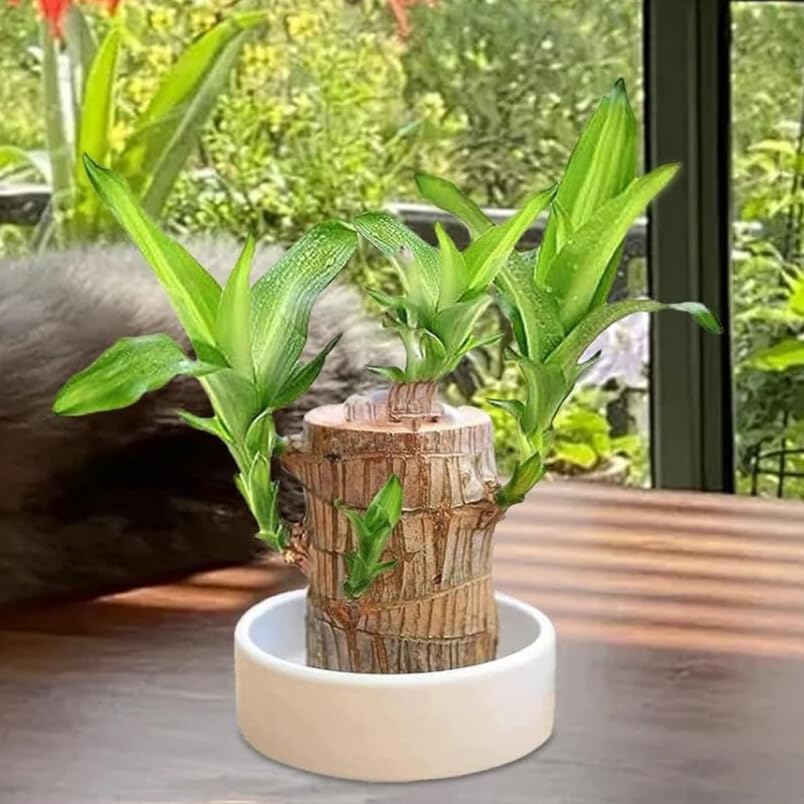
| Miniature Tabletop Bamboo | Short, compact arrangements | Office cubicles, bedside tables | Ideal for small Indian apartments |

FAQs
Conclusion
So now that you know all these 8 lucky bamboo plant benefits, I’m sure you’ll be equally eager to get one home. Remember that you can grow it in both soil and water. But if you’re choosing water (which most of us do), then do change it every 7–10 days. Also try to use filtered or rested water to reduce salt buildup, root stress, mosquito breeding & yellow tips. That’s all!
Other than that, you can also club it with other auspicious plants, say the snake plant for example. Or, you can also surround it with any of these other artificial plants if you don’t want to maintain the live ones. But if you do, here are our recommended shopping links as promised:



About the Author – Ar. Ruchika Deshpande
Founder, Sr. Content Writer & Strategist at Archwhispers | thearchwhispersblog@gmail.comLicensed Architect (B.Arch) from the Aayojan School of Architecture and Design.
Trained with RTF’s Editorial Platform for Writing and Architecture.
Certified in Writings in Architecture by Ethos.
4+ years of experience in architectural writing and content strategy.
Content Strategist at Archwhispers, blending architecture, writing, and SEO.
Citations
- https://ntrs.nasa.gov/api/citations/19930073077/downloads/19930073077.pdf
- https://pressbooks.umn.edu/environmentalbiology/chapter/indoor-air-pollution/
- https://news-archive.exeter.ac.uk/2013/july/title_306119_en.html
- University of Exeter – Research on plants, productivity, and workplace well-being.
- https://pmc.ncbi.nlm.nih.gov/articles/PMC4419447/


